

Article by
Graham Beck
Graham Beck is the Co-founder and CEO of DropDesk, a platform dedicated to a singular, transformative mission: unlocking the potential of underutilized spaces to foster human connection.
Graham Beck is the Co-founder and CEO of DropDesk, a platform dedicated to a singular, transformative mission: unlocking the potential of underutilized spaces to foster human connection.
Whether you need a space, want to earn from yours, or are ready to build your own marketplace — we have you covered.
Discover unique local venues for work, meetings, events, and celebrations.
Explore Spaces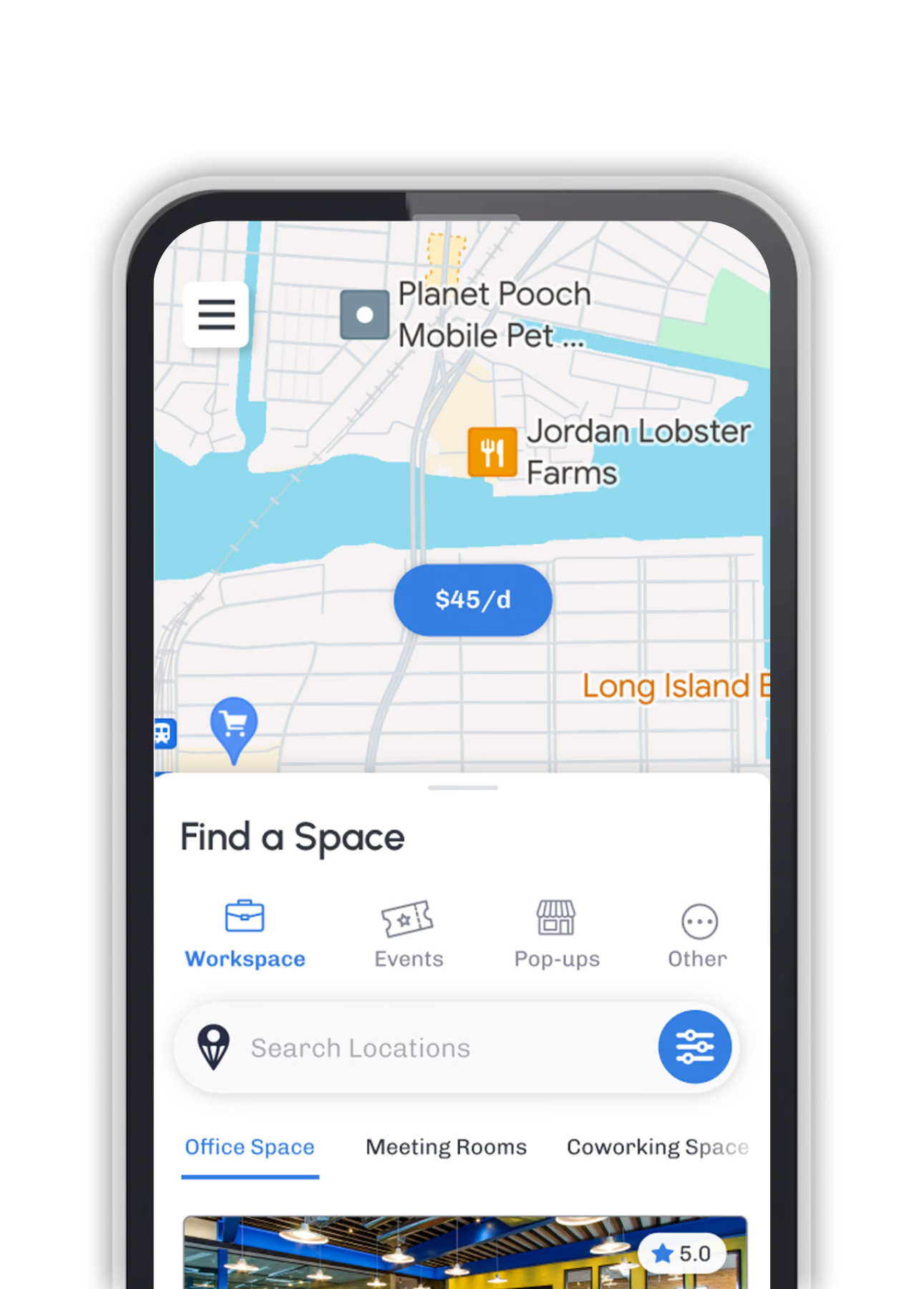
Book your favorite spots on the go. Available on iOS and Android.
An online marketplace is a website or app where multiple sellers offer products or services to buyers in one shared digital environment. Unlike a traditional online store that sells its own inventory, a marketplace typically does not own the products it lists. Instead, it connects independent sellers with customers and earns money by charging fees on the transactions that happen on the platform.
Think of an online marketplace like a digital shopping mall. The mall owner doesn't sell products directly—they provide the space, handle security, and set the rules. Sellers rent space and bring their own products, while shoppers enjoy the convenience of browsing many stores under one roof.
Here is a simple visual of how the model works:

The difference between a marketplace and a traditional online store isn't just about words—it's about how the business works financially and operationally.
| Feature | Traditional Online Store (Pipeline) | Online Marketplace (Platform) |
|---|---|---|
| Inventory | High Risk: The store owner buys and stores all inventory. | Asset-Light: Sellers own the products; the platform holds no stock. |
| Sellers | One (the store owner). | Many independent sellers. |
| Growth | Linear: Must invest in more warehouses and stock to grow. | Exponential: Driven by Network Effects (sellers attract buyers, which attract sellers). |
| Catalog | Limited by budget and storage space. | Virtually unlimited—sellers bring their own diverse catalogs. |

Marketplaces are typically categorized by who is selling and who is buying.
C2C marketplaces connect everyday people who want to buy, sell, or rent directly from each other.
B2C marketplaces connect professional businesses—brands, retailers, wholesalers—with regular consumers. This is the most common model in retail.
B2B marketplaces facilitate transactions between companies.
The marketplace model creates value for all participants by decoupling asset ownership from value creation.
Successful marketplaces often combine several revenue streams.
The platform takes a percentage or fixed fee from every successful transaction.
Sellers pay a flat fee to post an item, regardless of whether it sells.
Sellers pay for introductions to potential customers, even if the final transaction happens offline.
At launch, you need sellers to attract buyers, but sellers won't join without buyers.
Solution: Focus on Supply First. It is easier to acquire sellers (who want to make money) than buyers (who have to spend money). This creates a self-reinforcing flywheel effect.

Users may use your platform to meet but transact offline to avoid your fees.
Solution: Provide value beyond the connection. Offer tools like insurance, escrow payments, or scheduling software that users lose if they go off-platform.
It's not enough to have users; you need them to match within a reasonable timeframe.
Solution: Track your "Search-to-Fill" rates. If users are searching for "Conference Rooms" but getting no results, you have a clear data signal on exactly what supply to acquire next.
The era of multi-year, million-dollar marketplace builds is over. To succeed today, you must validate, build, and launch quickly.
Before writing code, confirm demand. Start by manually connecting buyers and sellers. If you can't make a transaction happen manually via email or spreadsheets, software won't fix the underlying lack of demand.
You have three main options, each with a different time-to-market.
Don't try to be everything to everyone. Win one niche completely before moving to the next (as seen in the image below).

Offer a tool that is valuable to the seller even without buyers.
The online marketplace model represents the pinnacle of digital efficiency, effectively decoupling asset ownership from value creation. Whether you are facilitating global B2B procurement or hyper-local space rentals, the opportunity for scale is unmatched.
However, success requires more than just a good idea—it requires the right tools to overcome the initial "chicken and egg" challenge. For founders in the rental and booking space, DropDesk's Marketplace Builder offers the specific advantage needed to win: a specialized booking engine, native calendar management, and a no-code infrastructure that lets you launch in days, not years.
By choosing a specialized platform over a generic builder, you can focus on what actually matters: solving the supply-demand problem and delivering value to your users. Once you are ready to build, review the essential pages every marketplace needs.
An online marketplace is a website or app that brings together multiple sellers and buyers in one place. The marketplace itself doesn't sell products—it provides the platform where others can transact.
A horizontal marketplace is a "one-stop shop" that sells everything (like Amazon). A vertical marketplace specializes in one specific industry (like StockX for sneakers) to offer deeper expertise and better features for that niche.
It depends on your network. B2C (Business-to-Consumer) often requires high marketing spend to reach mass consumers. B2B (Business-to-Business) relies on higher order volumes and relationships, often requiring sales teams but less mass advertising.
Yes. No-code marketplace platforms like DropDesk allow you to launch a functional marketplace in days without writing code. This is especially useful for validating your idea before investing in custom development.
The "chicken-and-egg" problem: attracting sellers when there are no buyers, and attracting buyers when there are no sellers. Most successful marketplaces solve this by focusing on supply first and starting in a narrow niche.
