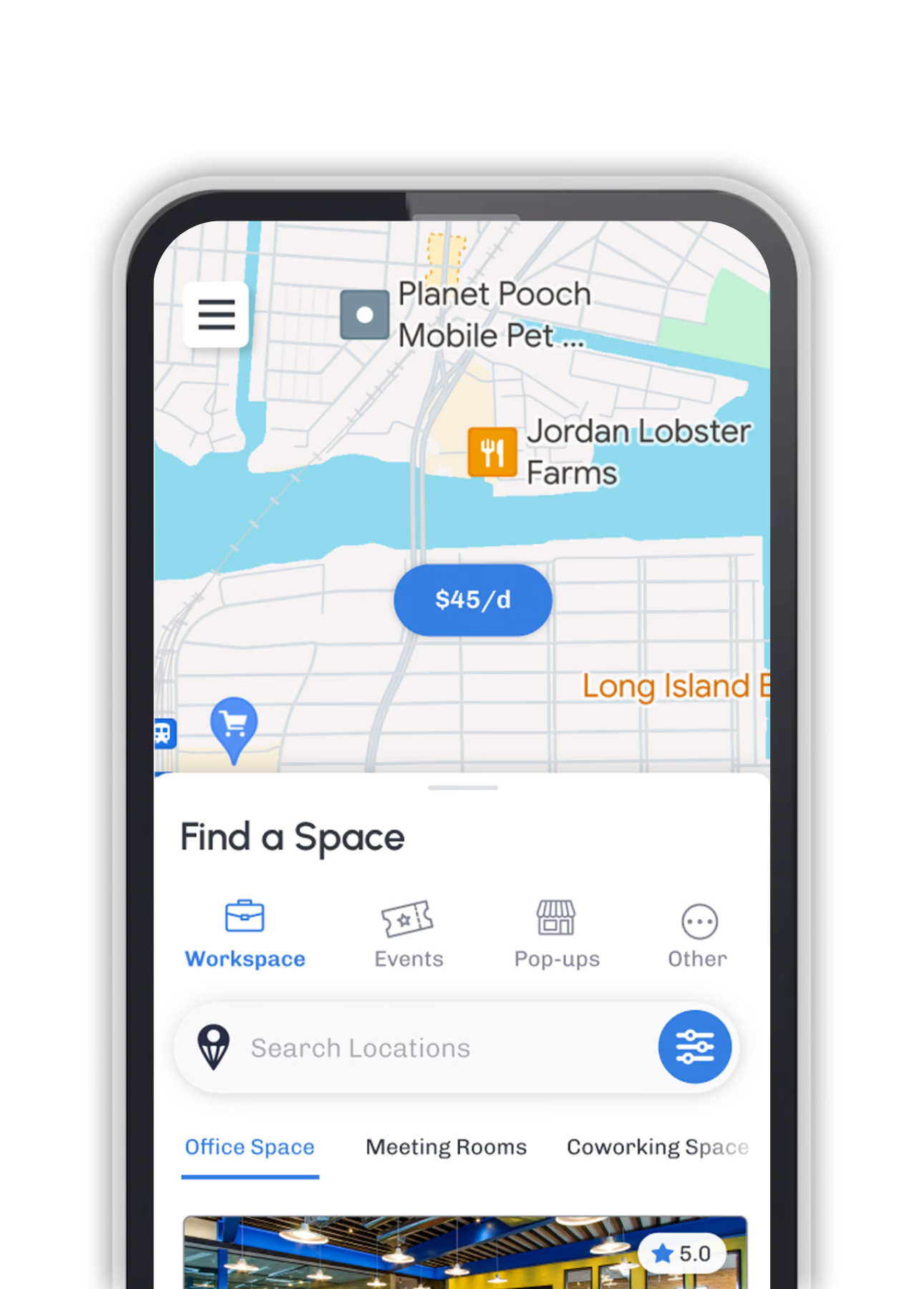
The traditional "9-to-5 in a headquarters" model is dead. The future is Hybrid Work, and companies are scrambling to find flexible office solutions. This has created a massive opportunity for entrepreneurs to build "The Airbnb of Office Space."
Whether it's a freelancer needing a hot desk for a day, a startup needing a private office for a month, or a corporate team needing a meeting room for an hour, a Flexible Workspace Rental Marketplace connects them all.
This guide covers everything you need to know: from defining your workspace niche and planning your business to using "done-for-you" no-code tools that let you launch in days, not months.
What Is a Flexible Workspace Marketplace?
Direct Answer: A Flexible Workspace platform is a B2B marketplace that connects space providers (landlords, coworking centers, companies with extra space) with professionals needing flexible work environments, typically using a short-term membership or "licence model".
It aggregates inventory—Private Offices, Hot Desks, and Meeting Rooms—allowing users to book them on-demand without long-term leases. Think of it as LiquidSpace or Deskpass, but tailored to your specific region or industry niche.
Who Benefits from a Workspace Marketplace?
A successful platform solves the "Rigidity Problem" of commercial real estate.
1. Benefits for You (The Marketplace Owner)
- High-Value Transactions: B2B customers spend more. A single "Private Office" booking can generate $1,000+ per month in recurring revenue, far higher than a $20 parking spot.
- Sticky Customers: Once a company finds a workspace they like, they tend to stay for months, creating predictable recurring commissions.
- Data Dominance: You gain insight into real-time commercial real estate demand, which is incredibly valuable data for landlords and developers.
2. Benefits for Hosts (Landlords & Companies)
- Monetize Excess Capacity: A law firm with 5 empty offices can rent them to accountants. A coworking space with low occupancy can fill desks via your app.
- Lead Generation: A user booking a "Day Pass" often converts into a full-time member for the host venue.
- Automated Billing: No need to chase invoices; the platform handles credit card processing automatically.
3. Benefits for Users (Remote Workers & Teams)
- Flexibility (No Leases): Teams can scale up or down instantly. Rent 5 desks this month, 10 next month, with zero long-term commitment.
- Professionalism: A real meeting room is far superior to a noisy coffee shop for client pitches.
- Cost Efficiency: "Pay-as-you-go" is cheaper than renting a permanent office that sits empty half the time.
Is the Flexible Workspace Market Profitable?
The market is shifting permanently toward "Space-as-a-Service."
- The Hybrid Revolution: 74% of U.S. companies are using or plan to implement a permanent hybrid work model. They need satellite offices, not HQs.
- Underutilized Assets: The global office vacancy rate is at historic highs. Landlords are desperate for platforms that can bring them revenue.
- Niche Opportunities: "Medical Coworking," "Beauty Salon Suites," and "Creator Studios" are booming sub-niches.
Successful Examples to Inspire You
- LiquidSpace: The giant of the industry, focusing on hourly and monthly enterprise bookings.
- Peerspace: While known for events, they are a dominant player in unique, creative meeting room rentals.
- Deskpass: A membership app that gives users access to a network of coworking spaces worldwide.
How to Plan Your Workspace Marketplace
- Executive Summary: Define your inventory mix. Will you focus purely on "On-Demand Meeting Rooms" for sales teams, or "Monthly Private Offices" for startups?
- Market Analysis: Are there many independent coworking spaces in your city that lack good marketing? These are your perfect supply partners.
- Financial Projections: Calculate the "Lifetime Value" (LTV) of a user. In workspace, LTV is high because businesses renew monthly.
Do I Need a License to Rent Office Space?
Direct Answer: You are generally facilitating an introduction and a license from the host to use space, not a real estate lease, which simplifies things.
- Commercial Lease Laws: Ensure your hosts have the right to licence or grant short term occupancy and in some cases a sublease. If a tenant rents out their office without the landlord's permission, it can cause legal trouble.
- Liability Insurance: Slip-and-fall accidents happen. You need "platform" liability insurance for your platform (you are just facilitating introductions) and hosts need their own general liability insurance.
- Zoning: Hosts need to ensure their listed spaces are zoned for commercial use (not residential living rooms, unless specifically allowed).
What Features Are Essential for Launch?
Business clients have higher expectations than casual consumers.
- Wi-Fi Speed Badges: The #1 question users ask is "Is the internet fast?" Displaying verified upload/download speeds is a trust signal.
- Access Control Integration: (Advanced) Integrating with smart locks (like Kisi or Brivo) so users can unlock the door with their phone.
- Amenities Filters: "Whiteboard," "Video Conferencing," "Phone Booth," "Coffee Included."
- Hourly vs. Monthly Logic: Your engine needs to handle both "Book for 2 hours" (Meeting Room) and "Book for 30 days" (Office) simultaneously.
Coding a platform that handles hourly calendars and monthly recurring billing is incredibly complex. DropDesk offers a managed marketplace builder service that handles this complexity for you.
How to Launch Quickly with DropDesk:
- 1Get Started: Visit the Marketplace Builder, click "Get Started," and create your account to kick off the process.
- 2Define Your Vision: We collaborate with you to map out your niche (e.g., "Creative Studios," "Corporate Overflow") and inventory strategy.
- 3Handover & Build: We build your custom website, integrated seamlessly with the DropDesk booking engine.
- 4Go Live: Receive your finished marketplace, complete with a powerful dashboard to manage bookings, teams, and payments.
- 5Scale Your Business: With the technical heavy lifting done, you are free to focus on what matters: onboarding coworking partners and marketing to local businesses. Hosts use the platform's self-service tools to create Packages, including pricing, short-form video, booking hours and restrictions (including pre-approval) and special instructions.
How Do Workspace Marketplaces Make Money?
There are five primary ways to monetize your platform:
- Commission Model (Most Popular): You charge a percentage (e.g., 10-30%) on every successful booking. This is low-risk for hosts as they only pay when they earn.
- Subscription Model: Hosts pay a flat monthly fee (e.g., $49/month) to be listed, regardless of how many bookings they get. Best for high-traffic platforms.
- Tiered Listings: Hosts can pay extra to appear at the top of search results or get a "Featured" badge.
- "Passthrough" Membership: Users buy a "City Pass" from you (e.g., $199/month for 10 visits), and you pay the venues a negotiated lower rate.
- Lead Generation Fees: For large offices (50+ people), you simply introduce the tenant to the landlord and take a "finder's fee" (often 10% of the first year's licence fees).
- LinkedIn Marketing: This is B2B. Target "HR Managers" and "Operations Directors" in your city with ads about "Flexible team workspace."
- SEO for Amenities: Optimize for "Meeting room with Zoom Rooms in [City]" or "Private office for 4 people."
- Coworking Partnerships: Approach independent coworking spaces. They often have empty desks and hate doing marketing. Offer to fill their desks for a commission.
Frequently Asked Questions (FAQ)
What is the difference between Hot Desk and Dedicated Desk?
A Hot Desk is an unassigned seat in a common area (first-come, first-served). A Dedicated Desk is a specific desk assigned exclusively to one user, where they can leave a monitor and files overnight.
How do hosts handle building access?
For the MVP (Minimum Viable Product), the host usually meets the guest at the door. As you scale, you can integrate with smart lock systems or keypad codes provided in the booking confirmation email. The DropDesk platform allows for special instructions for each package including the ability to add and change door codes.
Can I list home offices?
You can, but it's niche. Most corporate clients prefer commercial buildings due to liability, security, and amenities. "Residential Coworking" is a growing but separate category and you will need to check local zoning compliance.