What Is an Event Space Rental Platform?
Direct Answer: An event space rental platform is a two-sided online marketplace that connects venue owners (hosts) with individuals or businesses (guests) seeking short-term rentals for weddings, corporate meetings, photo shoots, or parties.
Instead of owning the buildings, the platform acts as the intermediary, handling the discovery, booking, and payment processing in exchange for a commission or subscription fee.
Who Benefits from an Event Rental Marketplace?
A successful platform solves problems for three distinct groups. Understanding these motivations is key to your marketing strategy.

1. Benefits for You (The Marketplace Owner)
- Scalability: Unlike traditional real estate, you don't need to buy property. You can scale from 50 to 5,000 listings without significant capital expenditure.
- Recurring Revenue Potential: By automating bookings and payments, you earn a commission on every transaction 24/7.
- Data Asset: You build a valuable database of user preferences, pricing trends, and venue inventory that becomes a saleable asset.
2. Benefits for Hosts (Venue Owners)
- Monetization of Idle Assets: Hosts can earn revenue from their space when it would otherwise be empty (e.g., an art gallery renting out for evening cocktail parties).
- Marketing Reach: Small venue owners often struggle with SEO. Your platform brings them traffic they couldn't generate alone.
- Automated Management: Features like synchronized calendars and automated invoicing reduce their administrative workload.
3. Benefits for Users (Guests)
- Access to Unique Inventory: Users can find "hidden gem" locations—like lofts, warehouses, or rooftops—that aren't listed on standard hotel sites.
- Price Transparency: A marketplace allows for easy comparison of amenities, capacity, and hourly rates.
- Trust & Security: Built-in reviews and secure payment gateways provide peace of mind compared to booking via Craigslist or direct email.
Is the Event Venue Booking Market Profitable?
The event venue booking market has seen significant growth, driven by the shift toward "experiential" events. According to recent statistics, the market is projected to reach over $10 billion in revenue by 2026.
Key drivers include:
- Remote Work: Companies without offices now rent off-site spaces for quarterly meetings.
- The "Creator Economy": Influencers and photographers constantly need fresh studios and unique backdrops.
- Micro-Weddings & Unique Events: A post-pandemic trend favoring smaller, unique venues over massive banquet halls.
Successful Examples to Inspire You
To understand the landscape, look at these market leaders in aggregating Event Venues:
- Peerspace: The "Airbnb of hourly rentals." Focuses on creative spaces for productions and off-sites.
- EventUp: A comprehensive directory connecting planners with large-scale commercial venues.
- Eventective: A robust platform that bundles venues with vendor services (catering, DJs).
How to Plan Your Event Space Rental Business
A great idea needs a solid foundation. Your business plan should address:
- Executive Summary: A brief overview of your niche (e.g., "Industrial warehouses for raves" or "Quiet rooms for therapists").
- Market Analysis: Who are your local competitors? What are they missing?
- Financial Projections: Estimate your "Take Rate" (commission %) and projected volume.
Do I Need a License to Operate an Event Rental Platform?
Direct Answer: Generally, the platform itself is a technology company, but you must ensure your hosts are compliant.
- Business Licenses: Required to legally operate your LLC or Corp.
- Insurance: You need "Marketplace Liability Insurance" to protect the platform. You should also require hosts to carry their own liability policies.
- Zoning Laws: Your terms of service must explicitly state that hosts are responsible for adhering to local zoning and noise ordinances.
What Features Are Essential for Launch?
To compete in 2026, your platform needs more than just listing pages.

- Real-Time Availability: Prevents double-bookings (the #1 killer of trust).
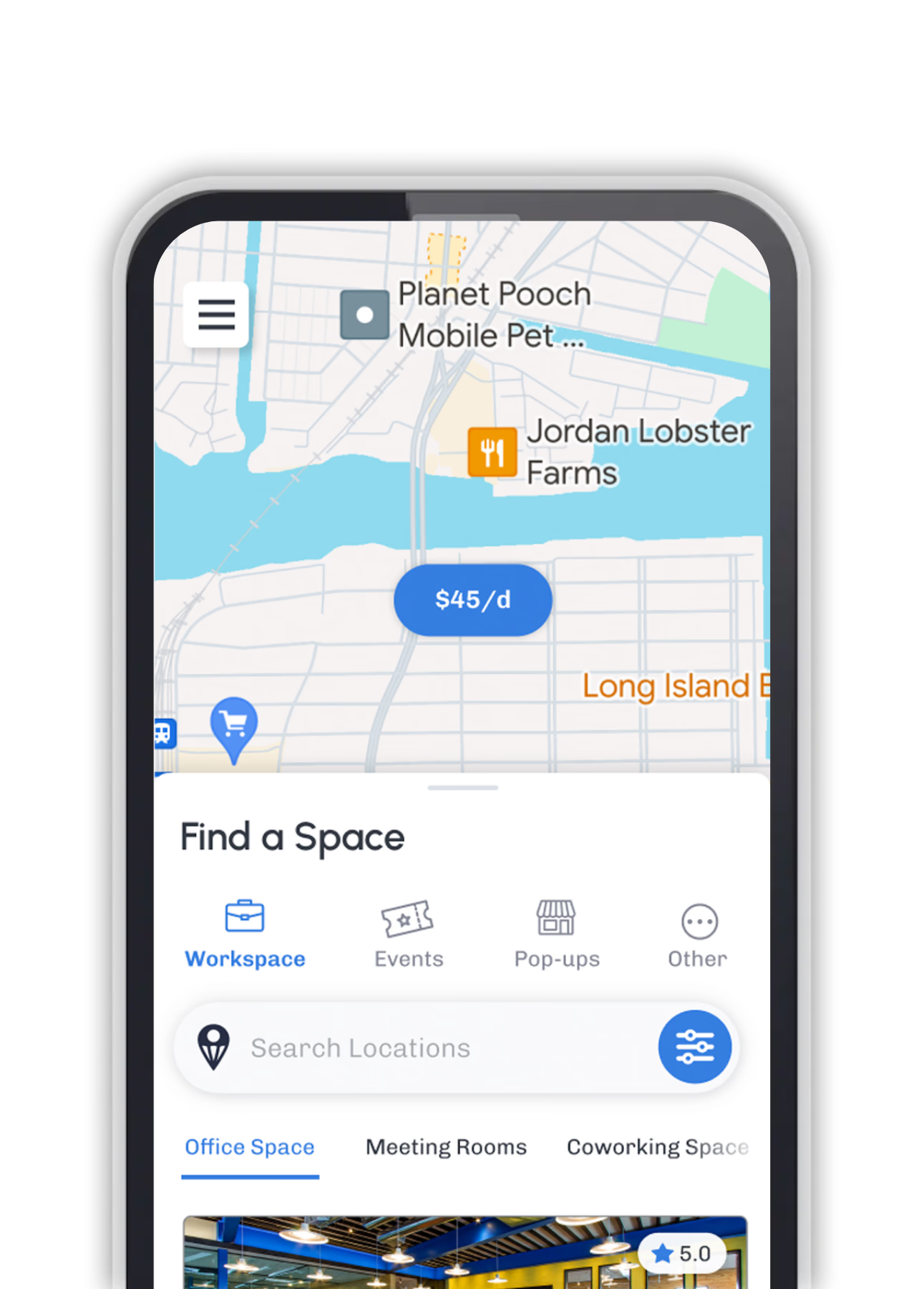
- Interactive Maps: Allows users to search by neighborhood or proximity to transit.
- Secure Messaging: Keeps communication on the platform to prevent "platform leakage" (users cutting you out of the deal).
- Multi-Tier Payment Split: The ability to automatically split a payment: 85% to the host, 15% to you.
How to Build Your Platform (The "Done-For-You" Way)
Traditionally, building a marketplace like Peerspace can cost hundreds of thousands of dollars in custom development just to get started. Today, DropDesk offers a managed solution that bridges the gap between complex coding and simple website builders.
How to Launch Quickly with DropDesk:
- Step 1: Get Started Visit the Marketplace Builder, click "Get Started," and create your account to kick off the process.
- Step 2: Define Your Vision We collaborate with you to map out your opportunities, categories, and inventory strategy.
- Step 3: Handover & Build We build your custom website, integrated seamlessly with the DropDesk platform.
- Step 4: Go Live Receive your finished marketplace, complete with a powerful dashboard to manage bookings, customer engagement, and payments.
- Step 5: Scale Your Business With the technical heavy lifting done, you are free to focus on what matters: onboarding hosts, attracting users, and growing your revenue.
Hosts use the platform's self service tools to create Packages including pricing, short form video, booking hours and restrictions (including pre approval) and special instructions.
How Do Marketplaces Make Money?
There are three primary ways to monetize your platform:

- Commission Model (Most Popular): You charge a percentage (e.g., 10-30%) on every successful booking. This is low-risk for hosts as they only pay when they earn.
- Subscription Model: Hosts pay a flat monthly fee (e.g., $49/month) to be listed, regardless of how many bookings they get. Best for high-traffic platforms.
- Tiered Listings: Hosts can pay extra to appear at the top of search results or get a "Featured" badge.
How to Market and Grow Your Platform
Once you build it, you must attract users.
- Hyper-Local SEO: optimize pages for specific intents like "Affordable baby shower venues in [City Name]."
- Social Proof: Encourage your first few users to leave detailed photo reviews.
- Supply-Side Outreach: Cold email venue owners who are already listed on Craigslist or Facebook Marketplace and offer them a safer, more professional alternative.
Frequently Asked Questions (FAQ)
How much does it cost to build a rental marketplace?
Custom development can cost hundreds of thousands of dollars to get started. However, using a managed marketplace builder like DropDesk significantly lowers the upfront cost, often shifting it to a monthly subscription or lower setup fee.
How do I get my first venue hosts?
Start by manually recruiting local businesses that have underutilized space (e.g., yoga studios, art galleries, restaurants closed during the day). Offer them free professional photography or 0% commission for the first 3 months to incentivize sign-ups.
Who handles the payments?
Modern platforms use integrated payment gateways like Stripe Connect. This automatically splits the payment, sending the earnings to the host and the commission to the platform owner instantly.
Graham Beck
Graham Beck is the Co-founder and CEO of DropDesk, a platform dedicated to a singular, transformative mission: unlocking the potential of underutilized spaces to foster human connection.